

NDIS Counselling in Cairns & Online Across Australia
Work towards feeling less overwhelmed, managing the impact of trauma, communicating your needs more confidently and developing practical strategies for everyday life.
Living with disability, experiencing trauma or adjusting to an injury or diagnosis can affect your sense of safety, confidence, emotions, relationships, independence and identity.
Counselling provides space to understand these experiences and discover your own ways forward. You might want to explore anxiety and overwhelm , the emotional impact of trauma or changes to independence and daily life.
Thinking about NDIS counselling?
Here are three things you might want to know before getting in touch.
Can Allan help me?
I offer individual counselling for people aged 14 and over, including support with overwhelm, emotional regulation, communication, trauma-related difficulties and adjusting to disability or life changes. We can talk about your needs and whether my approach is suitable.
See how to get started →Can I use my NDIS funding?
Possibly. I work with self-managed and plan-managed participants. Counselling must meet NDIS funding rules and relate to eligible disability support needs. We can discuss your plan and confirm funding arrangements before starting.
Read about funding eligibility →How do I contact Allan?
You can arrange a free 15-minute introductory chat, send an enquiry or ask your support coordinator to contact me with your consent. This first chat is a chance to ask questions, not a counselling session.
Book an introductory chat →Or call 0423 763 712.
Looking for a Counsellor for an NDIS Participant?
I accept enquiries for self-managed and plan-managed NDIS participants aged 14 and over in Cairns and across Australia.
Counselling can focus on emotional regulation, communication, confidence, trauma-related difficulties, adjustment and everyday functioning where these relate to eligible disability-related support needs.
My approach is practical, collaborative and trauma-informed. The participant's goals, circumstances and preferences guide the work.
Face-to-face appointments are available in Cairns, with possible home visits and remote appointments across Australia.
For more information, read my guide to referring someone for NDIS counselling .
Participant Suitability
We can discuss the participant's needs, preferred appointment format and whether counselling is suitable.
Funding and Service Agreements
Proposed NDIS eligibility, plan management, fees and service arrangements are discussed before starting.
Relevant Participant Goals
Counselling can be linked to disability-related goals and functional challenges where appropriate.
Progress Information
Brief factual summaries may be available for plan reviews with appropriate consent.
Provider Communication
Relevant communication with support coordinators, recovery coaches, occupational therapists and other providers may be arranged with consent.
What Would You Like to Work Towards?
The focus isn't just on how you feel during a session. It's also about what you would like to be different in everyday life.
People seek individual counselling for different reasons. For NDIS funding, counselling must connect with eligible disability-related support needs and goals.
Emotional Regulation
Recognise emotional triggers, understand your responses and explore ways to cope when situations become difficult.
Learn more about anxiety counselling in Cairns .
Communication and Self-Advocacy
Explore ways to express your needs, set boundaries, ask for support and prepare for difficult conversations.
Daily Routines and Tasks
Explore difficulties with appointments, paperwork, decisions and daily responsibilities.
Confidence and Independence
Explore personal choice, decision-making, confidence and participation in everyday activities.
Trauma and Adjustment
Explore the emotional impact of trauma, disability, injury, illness or significant changes in life.
Read about trauma-informed counselling .
Relationships and Participation
Explore connection, loneliness, confidence, communication and barriers to community participation.
If you're also coping with loss, grief counselling explores how grief can affect relationships, identity and expectations for the future.
Connecting Counselling to Everyday Outcomes
Where appropriate, we can identify relevant disability-related goals and discuss how progress might be recognised during counselling.
| Goal Area | Counselling Focus | Possible Progress Evidence |
|---|---|---|
| Emotional regulation | Recognising triggers, responses and exploring coping strategies. | Participant describes strategies tried and their perceived usefulness. |
| Communication | Expressing needs, boundaries and preparing for conversations. | Participant reports practising a strategy or using it in daily life. |
| Daily functioning | Exploring avoidance, planning and emotional barriers to tasks. | Participant describes progress or ongoing difficulties with tasks. |
| Participation | Understanding confidence, emotional barriers and relationship challenges. | Participant describes attempts, achievements or continuing barriers. |
| Disability adjustment | Exploring identity, change, emotions and coping approaches. | Participant reports insights, strategies and continuing needs. |
These are illustrations, not guaranteed outcomes. Individual goals and progress reporting must reflect actual counselling work.
From Referral to First Appointment
Whether you're making an enquiry for yourself or referring someone with their consent, the starting process is straightforward.
Send an Email Referral
Click the green referral button. Your email app will open with a prewritten draft containing the referral fields.
Complete the relevant details and send the email. Only share personal or sensitive details through an appropriately secure channel.
Discuss Suitability and Funding
We discuss the proposed support, disability-related needs, funding eligibility, plan management, access and current availability.
You can also review my counselling fees before proceeding.
Agree on the Arrangements
If counselling is suitable, we discuss the service agreement, confidentiality, consent, appointment arrangements, relevant goals and reporting.
Progress Information Connected to NDIS Goals
Clear documentation can help explain why counselling was undertaken, what has been worked on and which challenges remain.
With appropriate consent, brief factual progress summaries may be prepared for plan reviews, support meetings and provider handovers.
Reporting needs should be discussed in advance so the content, timeframe and any applicable charges can be agreed.
My article about NDIS plan reassessments and counselling explains related considerations.
Reason for Counselling
Relevant disability-related needs and goals connected with the counselling request.
Work Undertaken
Counselling themes, strategies explored and work actually completed.
Progress and Remaining Barriers
Participant-reported changes, supported observations and challenges that remain.
Ongoing Support Needs
Areas where further support may be relevant, where supported by available information.
Progress summaries are not diagnostic reports, psychological assessments, functional capacity assessments or behaviour support plans.
All summaries are based on available evidence. Progress and outcomes are not invented or guaranteed.
Understanding Difficult Experiences and Finding Ways Forward
Trauma, disability-related stress, burnout and significant life changes can affect emotional responses, confidence, relationships and everyday functioning.
My counselling approach is collaborative and trauma-informed. We can explore how experiences have affected you, what helps you feel safer and how to respond when things become difficult.
Depending on your needs, I draw on approaches including Cognitive Behavioural Therapy, Solution-Focused Brief Therapy, Gestalt Therapy and Emotionally Focused Therapy. You can read more about my counselling approach .
If trauma is your main concern, my trauma counselling page explains this work in more detail. Clinical trauma treatment may fall under the health system rather than NDIS funding.
Explore What's Happening
Understand emotional and practical challenges and how they affect everyday life.
Understand Reactions and Patterns
Explore thoughts, emotions, triggers and situations that may be contributing to difficulties.
Explore and Review Strategies
Consider practical approaches, try suitable strategies and discuss how useful they are in everyday life.
You may also find my articles on autistic burnout and anxiety after a diagnosis useful.
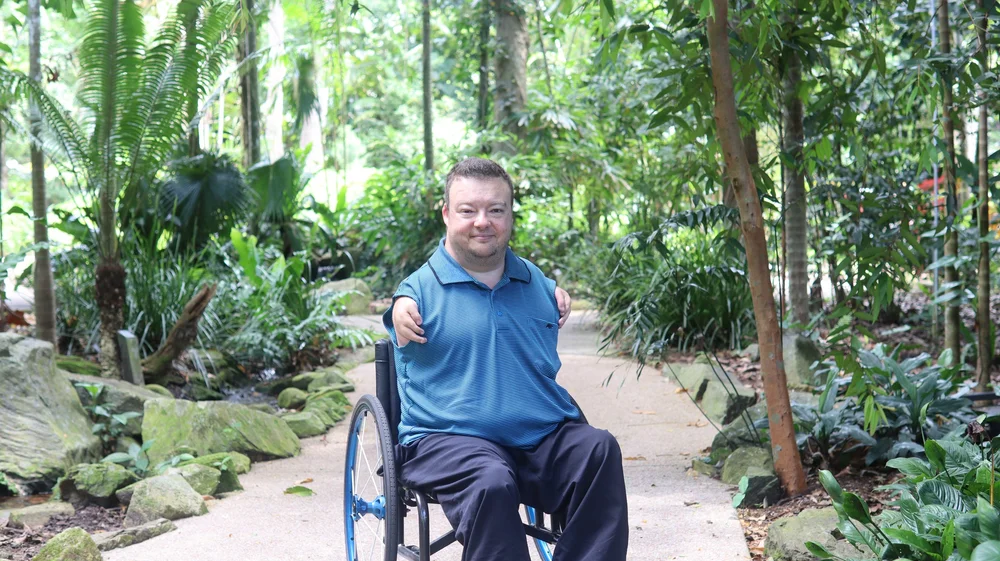
Allan Bunyan | Cairns Counsellor
Professional Training. Lived Experience.
I'm Allan Bunyan, a qualified counsellor based in Cairns. I live with disability and have worked in disability and NDIS-related services since 2018.
I've used a wheelchair since childhood and also live with an upper limb difference.
My background includes disability support, support coordination and counselling.
These experiences inform how I understand access, independence, assumptions and the challenges of navigating support systems.
My lived experience informs my perspective. My professional training guides how I practise counselling.
I don't assume my experiences are the same as yours. We work together to understand your circumstances and explore what matters to you.
I hold a Diploma of Counselling, am a CPCA member (#47516), and am completing my Bachelor of Counselling through Torrens University Australia.
Learn more about my qualifications, background and approach on my About Me page .
Can Your NDIS Plan Fund Counselling?
Sometimes, yes. It depends on the purpose of counselling, disability-related needs, available funding and current NDIS requirements.
Read my guide about how NDIS counselling funding works for more information.
Disability-Related Capacity Building
Counselling may be eligible when the proposed support relates to disability-related capacity building and daily functioning.
- Emotional regulation
- Communication and self-advocacy
- Confidence and participation
- Daily functioning and independence
- Disability-related adjustment
Relevant funding may be within Capacity Building, including Improved Daily Living, depending on the plan and current rules.
Mental Health Treatment and Diagnosis
The NDIS generally does not fund diagnosis or clinical mental health treatment that is the responsibility of the health system.
Having an NDIS plan does not automatically mean every counselling service can be claimed.
Depending on your needs, support from a GP, psychologist, psychiatrist or another health professional may be more appropriate.
I accept self-managed and plan-managed participants where the proposed counselling is eligible and funding arrangements have been confirmed.
I am not an NDIS-registered provider and cannot accept NDIA-managed funding for this service.
If you're plan-managed, your plan manager should confirm whether the proposed support and provider can be paid under your plan.
Read my guides for self-managed participants and plan-managed participants .
Clear Fees Before You Book
Per 50-minute counselling session.
This is my chosen session fee, not the NDIS maximum rate.
Full information about payment arrangements is available on my Counselling Fees page .
My NDIS counselling line item guide provides additional information.
Counselling That Works Around Your Circumstances
Counselling doesn't have to look the same for everyone.
Different formats may suit different communication, accessibility and personal preferences.
Face-to-Face Counselling in Cairns
Face-to-face counselling is available on Tuesdays and Wednesdays by appointment at Room 22, Level 2, 129A Lake Street, Cairns City. Phone and video counselling is also available throughout the week, subject to appointment availability.
Take the lift to Level 2 and turn right. There is on-street parking, a nearby council car park and a Lake Street bus stop outside the building.
Access information: The lift accommodates manual wheelchairs but is too small for larger powered wheelchairs. Please discuss access before booking.
Video Counselling
Attend from home or another suitable private space, anywhere in Australia.
Video sessions may help reduce barriers associated with travel, transport, mobility or fatigue.
Phone Counselling
Phone appointments may suit people who prefer not to use video or feel more comfortable speaking without a camera.
Available Australia-wide, subject to appointment availability.
Live Chat Counselling
If typing feels easier than speaking, live chat counselling allows us to communicate through written messages during a scheduled real-time session.
This may suit people who find spoken communication difficult or prefer expressing themselves in writing.
Find more details on my Live Chat Counselling page . NDIS funding for this format must be confirmed before booking.
Home Visit Counselling in Cairns
Home visits may be considered when mobility, fatigue, transport or other circumstances make travelling to a counselling room difficult.
Visits depend on location, access, privacy, safety and availability. Any applicable costs are discussed in advance.
Communication and Access Needs
We can discuss sensory needs, processing time, fatigue, communication preferences and other accessibility considerations before arranging counselling.
A support person's involvement can also be discussed with the participant's consent.
Based in Cairns. Supporting Participants Across FNQ.
Face-to-face counselling is available in Cairns, with phone and video appointments for participants elsewhere in Far North Queensland and across Australia.
People may enquire from Cairns City, Earlville, Woree, Edmonton, Mount Sheridan, Bentley Park, Gordonvale, Redlynch, Smithfield, the Northern Beaches and surrounding communities.
For participants living on the Tablelands, Cassowary Coast or in more remote communities, phone or video counselling may be a practical alternative to travelling to Cairns.
Home visits in Cairns may be discussed where suitable. They aren't automatically available throughout FNQ.
Contact me about local availability or arrange a free introductory chat.
Information That Helps With a Referral
The referral email opens with spaces to complete participant details, NDIS plan information, counselling needs and the referrer's contact information.
The template includes:
- Participant name and contact details
- Date of birth and NDIS number
- Self-managed or plan-managed status
- Plan manager contact details
- Plan dates and relevant NDIS goals
- Reason for counselling referral
- Preferred appointment format
- Communication and access needs
- Progress reporting requirements
- Confirmation of participant consent
- Referrer name and organisation
Only include sensitive participant information when there is appropriate consent and a secure method of transmission.
You can also read my NDIS counselling referral guide .
Your Counselling. Your Decisions.
Counselling is a private and collaborative process, even when other providers are involved.
We discuss confidentiality, its limits and the handling of information-sharing requests before counselling begins.
Information may be shared with support coordinators, family, plan managers or other providers where appropriate consent or another lawful basis applies.
If I also provide support coordination to someone considering counselling, we'll discuss possible conflicts of interest, alternative providers, informed consent and safeguards.
My article about recognising concerns in counselling may also be helpful.
NDIS Counselling Questions and Answers
How do I make an NDIS counselling referral?
Click an Email an NDIS Referral button on this page. It will open a draft email addressed to me with blank fields for relevant referral information.
Complete the details that can be shared appropriately and send the email. Sensitive information should only be transmitted securely.
What outcomes can NDIS counselling work towards?
Counselling may focus on emotional regulation, communication, confidence, adjustment, independence and everyday participation. Goals depend on the participant's circumstances and outcomes aren't guaranteed.
Can NDIS counselling address trauma?
Trauma-informed counselling may explore emotional regulation, coping and the impact of difficult experiences. NDIS eligibility depends on the purpose of the support. Clinical trauma treatment may be the responsibility of the health system.
Can support coordinators request progress summaries?
Brief factual summaries may be available with appropriate consent. Content, timing and any applicable charges are discussed beforehand.
Is NDIS counselling automatically funded?
No. The support must meet current eligibility requirements and be compatible with the participant's funding arrangements.
Do you accept plan-managed participants?
Yes, where the proposed support is eligible and the plan manager can pay for the provider and support. I also accept self-managed participants.
I am not an NDIS-registered provider and cannot accept NDIA-managed funding for this service.
What is your counselling fee?
My fee is $110 for a 50-minute session. This is my chosen fee, not the NDIS maximum.
Can counselling be provided through live chat?
Yes. Live chat counselling involves written communication during a scheduled real-time appointment. NDIS funding must be checked before booking.
Do you offer home visits in Cairns?
Home visits may be available depending on location, privacy, access, safety and availability. Applicable charges are discussed in advance.
What is the NDIS counselling line item?
The counselling support item discussed on this page is 15_043_0128_1_3 within Capacity Building / Improved Daily Living. Use of the item must meet current NDIS requirements.
Do I need a GP referral or Mental Health Treatment Plan?
No GP referral is needed to contact me. My counselling sessions do not attract Medicare rebates and cannot be claimed under a Mental Health Treatment Plan.
Helpful articles about NDIS counselling
If you're looking into counselling for yourself or someone you support, these articles explain common questions about funding, plan management, referrals and getting started. NDIS rules and pricing can change, so check your current plan and the latest NDIA guidance before arranging funded supports.
How NDIS Counselling Funding Works
Understand how counselling funding may work and what needs checking in your plan.
Read article →What Line Item Does NDIS Counselling Come Under?
A guide to the counselling support item and where it fits in NDIS budgets.
Read article →NDIS Counselling for Plan-Managed Participants
What plan-managed participants should know before arranging counselling.
Read article →NDIS Counselling for Self-Managed Participants
How self-managed participants can approach provider choice and payment.
Read article →How to Refer Someone for NDIS Counselling
Information for support coordinators, families and others making a referral.
Read article →How to Access NDIS Counselling in Cairns
A starting point for exploring counselling options locally.
Read article →NDIS Plan Reassessment and Counselling in 2026
Considerations when preparing for a plan reassessment.
Read article →NDIS Counselling for Autistic Adults in Cairns
How counselling can be adapted around communication preferences and individual goals.
Read article →For the latest official rules, visit the NDIS website.
Ready to Work Towards What Matters to You?
Counselling can start with understanding what's happening, what you want to be different and which strategies may be useful.
Participants, families and support coordinators are welcome to enquire about suitability, funding, goals, reporting and appointment options.
A free 15-minute introductory conversation is available to ask questions and see whether counselling might be suitable. This is not a counselling session.
Call or text 0423 763 712 or email allan@strongfoundationsupport.com .
Face-to-face counselling: Available Tuesdays and Wednesdays by appointment at Room 22, Level 2, 129A Lake Street, Cairns City QLD 4870.
Phone and video counselling: Available throughout the week across Australia, subject to appointment availability. Live chat counselling may also be arranged, subject to suitability and funding checks.
Home visits: May be considered in Cairns, subject to suitability and availability.
Strong Foundation Support is not an emergency or crisis service. In an emergency call 000. For crisis support, contact Lifeline on 13 11 14.